World Cup Podiums, Small-Town Shadows: The Strange Duality of Dynastar in America
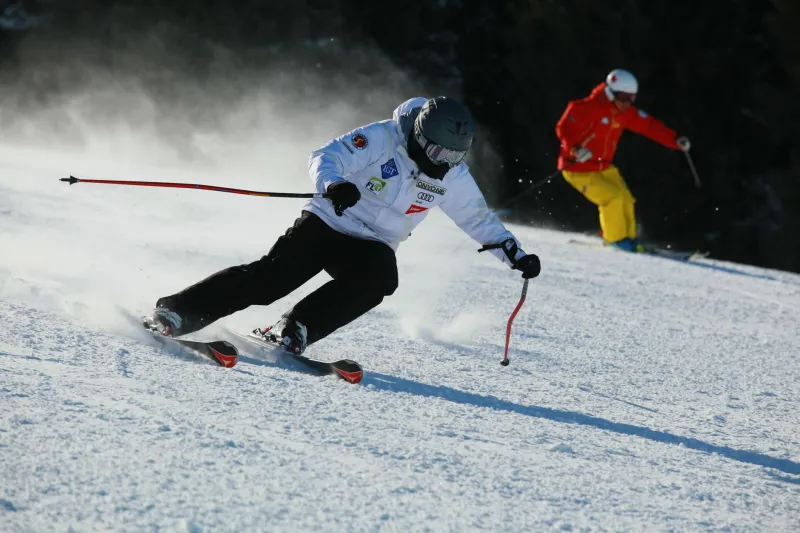
There's a moment that happens every winter, somewhere on a World Cup downhill course, where a Dynastar ski crosses the finish line and the crowd goes absolutely sideways. The times are fast. The headlines are real. And then, about 4,800 miles away in some mid-sized ski town in Colorado or Vermont, a first-time buyer walks into a shop and asks the guy behind the counter what he recommends — and Dynastar doesn't come up once.
That's not an exaggeration. That's just kind of how it goes.
The brand has a paradox baked into its American identity: elite-level credibility on one side, near-total invisibility on the other. It's one of the stranger disconnects in US ski retail, and if you spend any time talking to coaches, racers, or shop staff, the reasons start to stack up in ways that are both obvious and kind of fascinating.
What the Race Results Actually Say
Let's start with the part that doesn't get debated. Dynastar's résumé on the World Cup circuit is legitimate. The brand has backed athletes in disciplines ranging from slalom to super-G, and it has the hardware to show for it. Coaches who work in the FIS pipeline will tell you — often without much prompting — that Dynastar's race-specific construction is among the most technically refined in the game.
"These are not marketing skis," said one development-level alpine coach who works with junior racers in the Northeast. "When a brand is competing at that level, the R&D is real. It has to be. You can't fake fast."
That R&D doesn't disappear when it migrates into the consumer line, either. The materials science, the flex profiles, the edge geometry — a lot of what gets developed on race snow eventually filters down into the skis that regular people can actually buy. That's true across the industry, but Dynastar's lineage from the Alps gives it a particular kind of engineering credibility that's hard to manufacture.
So why isn't that story landing in American ski towns?
The Visibility Gap Is Real — and It's Complicated
Talk to anyone who works in specialty ski retail in the US and they'll point to a few structural reasons. Distribution footprint is one. Dynastar has historically had a narrower retail presence in the States compared to brands like Rossignol, Salomon, or K2 — names that have spent decades building relationships with regional shops and demo programs. When a shop only has so much floor space and so many demo pairs to offer, they're going to lean toward what their customers already recognize.
"Brand awareness drives demo requests, and demo requests drive sales," explained a shop manager at a resort-adjacent retailer in the Rockies who asked to stay anonymous. "If someone walks in and they've never heard of a brand, they're not going to ask to try it. And if they don't try it, we don't sell it. It's a tough cycle to break."
That cycle is compounded by the way American ski culture tends to absorb information. In Europe — particularly in France, where Dynastar was founded — ski racing is woven into the cultural fabric. Kids grow up watching it. Parents talk about it at the dinner table. The World Cup circuit has genuine mainstream relevance. In the US, alpine racing is more of a niche-within-a-niche. The average recreational skier in Park City or Killington probably couldn't name the current World Cup overall leader without looking it up. And if you can't leverage race success as a marketing tool because your target audience isn't watching the races, that's a real problem.
The Fans Who Did Find It
Here's the twist, though. Among the skiers who have found Dynastar — who've demoed a pair at a race camp or stumbled across one at a gear swap or got a recommendation from a coach — the conversion rate is almost comically high. These are not casual fans. They're the kind of people who send emails to this website at 11pm on a Tuesday to talk about edge tune angles.
That's not an accident. When a brand's reputation is built on performance rather than lifestyle marketing, the people who find it tend to be the ones who were looking for exactly that. They did the research. They tried the ski. They felt what the race pedigree actually translates into underfoot. And then they told two friends.
"I found out about my current setup through a guy at a masters race clinic," said one skier from New Hampshire who's been on Dynastar for three seasons. "He just said, 'try these.' I did one run and I was done shopping." That kind of word-of-mouth is Dynastar's most reliable growth engine in the US right now — and it's also its biggest limitation, because it scales slowly.
What It Would Actually Take to Change
The answer isn't just more Instagram ads, though that probably wouldn't hurt. The real lever is demo access. Getting more Dynastar pairs into the hands of recreational skiers — through resort demo fleets, race camp partnerships, and retailer incentive programs — would do more for brand awareness than almost any campaign. You can't sell a performance ski on vibes alone. People have to feel it.
There's also an opportunity in the masters racing community, which is enormous in the US and deeply underserved by mainstream ski marketing. These are adults who care about edge performance, who read gear forums at an almost alarming level of depth, and who make purchasing decisions based on actual skiing rather than influencer content. Dynastar is almost perfectly positioned for that audience — it just hasn't leaned into it hard enough stateside.
Coach-level relationships matter too. When a development coach recommends a brand to a 16-year-old who's just starting to take racing seriously, that recommendation echoes for a decade. Dynastar has those relationships in Europe. Building more of them in the US pipeline — at ski academies, at junior programs, at high school racing clubs — would pay long-term dividends in ways that are hard to quantify but impossible to ignore.
The Brand Isn't Broken. The Story Just Hasn't Been Told Here.
None of this is a knock on Dynastar. The skis are legitimate. The heritage is real. The race results speak for themselves if you know where to look. The gap between European dominance and American obscurity isn't a product problem — it's a market problem, and market problems are solvable.
For now, the people who ride Dynastar in the US tend to carry a certain quiet confidence about it. They know what they're on. They know why it works. And they're not particularly bothered that the skier on the chair next to them has never heard of it.
Maybe that's part of the appeal. Or maybe it's just a matter of time before the rest of the mountain catches up.