Gear Doesn't Make the Skier — But These Skis Might Prove Otherwise
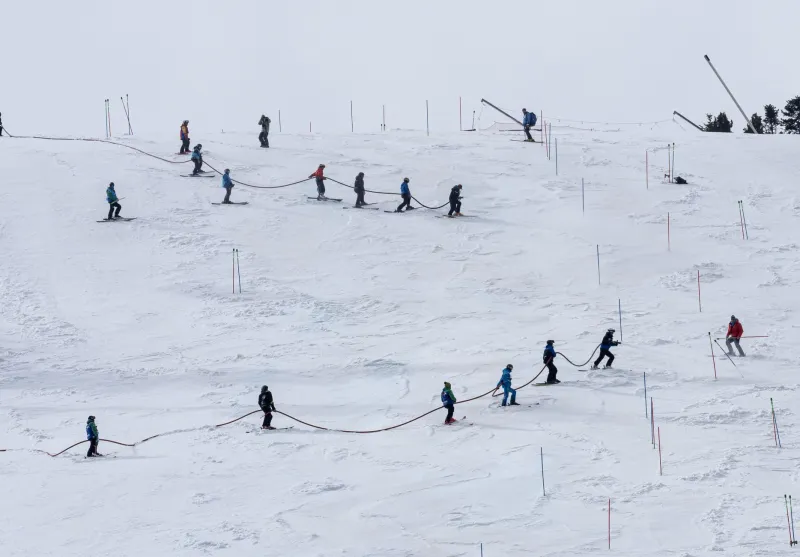
Walk up to the top of any blue-to-black transition on a busy Saturday at a mid-size American resort and watch for a few minutes. The skier carving clean, patient arcs through variable snow probably isn't riding the hottest new model from a brand that dropped a six-figure marketing campaign last fall. More often than not, they're on something older, something narrower, and something French.
That's the Dynastar effect — at least that's what the ski community has started calling it. It's the quiet observation, passed around in lodges and lift lines, that riders on Dynastar equipment tend to look fundamentally better than their peers at the same ability level. But is that actually true? Or is it just the kind of mythology that grows around any gear brand with a loyal, slightly evangelical following?
We went looking for answers.
What the Coaches Are Actually Seeing
Ask any PSIA-certified instructor who's spent more than a few seasons teaching and they'll tell you the same thing: gear choice and skill development are deeply tangled. Not because better gear makes you better, but because the wrong gear can mask bad habits for years.
"A super forgiving, rockered-out all-mountain ski will let a skier get away with being in the backseat," said one Level III instructor who's been teaching at a Colorado resort for over a decade. "They still get down the hill. They think they're progressing. But they're not really learning to drive the ski — the ski is driving them."
Dynastar's traditional lineup, particularly models like the Speed series and older race-inspired carvers, skews toward a more demanding, responsive ride. They reward good technique. They punish laziness. That's not a flaw in the design — it's a feature, if you're trying to actually get better.
A Vermont ski school director who's tracked student progression across equipment types for several seasons put it bluntly: "Kids who start on more demanding skis — and Dynastar race-influenced models fall into that category — tend to develop edge awareness earlier. They learn to angulate. They learn where their weight needs to be. The ski tells them when they're wrong."
The Ski Patrol Perspective
Ski patrol sees something different: the aftermath. And they've got opinions about what gear correlates with what kind of incidents.
One patroller at a Utah resort with over fifteen seasons on the hill said something that stuck with us. "The worst crashes I see aren't from people on old or demanding skis. They're usually from people who bought the most forgiving, easy-riding ski they could find and then took it somewhere it shouldn't go. They trusted the gear instead of trusting their own read of the mountain."
It's a different framing of the same idea. Dynastar skis, particularly the performance-oriented models that dominate their catalog, tend to attract riders who've already committed to learning the mountain on its own terms. The gear and the mindset arrive together.
The Intermediate Ceiling Problem
Here's where it gets genuinely interesting. American ski culture has a well-documented intermediate plateau problem. Skiers reach a comfortable blue-run cruising level and stop progressing — sometimes for years, sometimes forever. The industry has studied it, ski schools have designed programs around it, and gear companies have tried to engineer their way out of it.
What some instructors are observing is that skiers on more demanding equipment hit that plateau less often, or push through it faster. The feedback loop is tighter. You can't coast on a ski that requires you to be present.
"I had a student last winter who'd been skiing for eight years and was stuck," said an instructor at a Michigan resort. "We swapped her into a pair of borrowed Dynastar carvers for a half-day session. Not because they're magic, but because they were going to tell her the truth about her stance. By the end of the session she'd made more real progress than she had in two seasons."
That's anecdotal, obviously. But it's a pattern that comes up repeatedly when you talk to people who teach skiing for a living.
Is This Just Brand Mythology?
Fair question. Every brand has its loyalists who construct narratives around why their choice is the superior one. Dynastar fans are not immune to this.
But there's something worth separating out here. The mythology isn't really about Dynastar being the best ski. It's about what kind of skier tends to choose Dynastar, and what that choice tends to do to their development. The brand's deep roots in alpine racing and technical performance attract riders who are already inclined to prioritize skill over comfort. The skis reinforce that inclination.
Is it the ski or the skier? Probably both. Almost certainly both.
What This Means for How You Train
If you're genuinely trying to get better — not just have fun (both are valid, by the way) — the gear-as-teacher argument has real merit. Riding a ski that forgives everything slows down the feedback loop between your body and the mountain. Riding something that talks back speeds it up.
That doesn't mean you need to suffer through a ski that's too stiff for your ability level. Dynastar makes a wide range of models, and matching the right one to your current skill set matters. But if you've been cruising on the same comfortable all-mountain setup for three or four seasons and you're not sure why you're not improving, the ski might be part of the answer.
The best skiers at your local mountain probably aren't riding the newest gear. They're riding gear that taught them something. And a lot of them learned it on Dynastars.